You can appreciate a kind gesture and still be having a difficult day. A friend bringing dinner does not make a loss less painful. A colleague helping with a task does not settle a complaint about your workload. You do not have to choose one account and erase the other.
This guide offers a voluntary way to notice something you appreciate, with room to keep it private, share it or leave the exercise alone. It does not promise better health, a transformed relationship or a particular feeling afterwards.
What this guide means by gratitude
For this exercise, gratitude means noticing something you appreciate and considering what contributed to it. That is a working definition for the prompts below, rather than a complete account of the psychology of gratitude.
The subject can be ordinary: someone explained an unfamiliar process, a neighbour returned a parcel, or you enjoyed a quiet place to sit. It can also be something you have appreciated before. You do not need a novel answer every time, and you do not need to praise your health, family or job if that does not feel true to your circumstances.
What one early study does and does not tell us
The abstract of Emmons and McCullough’s 2003 paper describes three randomised studies. Gratitude groups reported improvements on several measures of wellbeing compared with other conditions, but not on every measure. The authors described the finding for positive feelings as the most robust.
That is a limited reason for interest, not a prediction about an individual reader. The studies involved different activities and populations. Weekly recording in one study and daily recording in another do not establish that twice a week is better than daily. The abstract also does not validate the particular prompts below. This summary is based on the abstract, not a review of the full paper or the whole field.
An optional three-line reflection
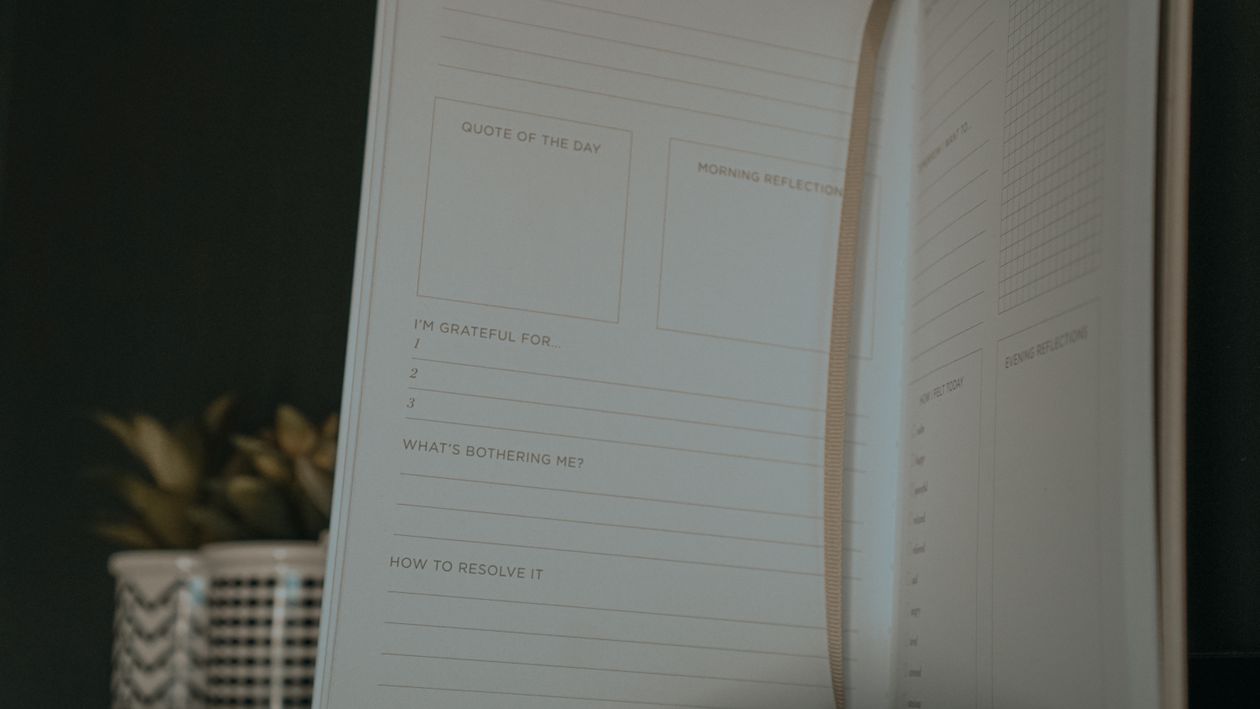
If you want to try writing, choose a moment when it is convenient. Use paper, a private note or another accessible format. There is no required time of day, duration or streak. You can try it once before deciding whether you want to return to it.
- What happened? Describe one moment in ordinary language. A concrete detail can give you something to reflect on, but a broad answer is allowed too.
- What contributed? Note a person, circumstance or resource that mattered. Your own effort can belong in the account alongside help from elsewhere.
- Why did I appreciate it? State what it meant to you without inventing a dramatic result. “I understood the next step” is enough.
You can add a fourth line: What is still difficult or needs action? Appreciation does not cancel that part of the account.
A fictional example
In this invented workplace example, Dev explains a software deployment checklist to Morgan. Morgan writes:
- “Dev showed me where the checklist is and explained the step I did not understand.”
- “His explanation helped, and I asked a question when I was unsure.”
- “I appreciated having a clearer next step.”
Morgan also notes: “I still need my manager to clarify who checks the work before release.” There is no assumed rescue from a disaster or promised improvement in their working relationship. The helpful moment and the unresolved responsibility both remain visible.
Private appreciation is a valid choice
A note does not have to leave your notebook to be worth keeping. You may prefer to reflect silently, draw something or write a message you never send. Consider who can access a shared device or notebook before including personal details.
If you would like to thank someone and contact is welcome and safe, you could say: “Thank you for explaining that step. I understand what to check next.” Keep the message accurate and proportionate. You do not owe a public post, a face-to-face conversation or an emotional disclosure.
At work, check whether public credit would expose information or attention the person does not want. A thank-you is an expression of appreciation, not a request for future favours. It does not require a reply, equal warmth or a change in the relationship.
Leave room for your own meaning
You may connect appreciation with prayer, a religious tradition, nature, community or none of those. Choose language that fits your beliefs. This exercise does not require a spiritual interpretation, and it makes no claim about what everyone’s faith teaches.
If listing something positive feels forced, you can leave the page blank. You can also describe the day without looking for a benefit. You are not failing a practice by declining it.
When another response matters more
Gratitude is not an obligation to tolerate mistreatment, forgive someone, resume contact or withdraw a legitimate complaint. Safety decisions, practical help and appropriate support can take priority. You do not have to feel appreciative before addressing a problem.
During grief or distress, there is no requirement to find a silver lining. A pleasant moment, if one occurs, does not erase pain; pain does not make the pleasant moment dishonest. Equally, you do not have to find such a moment at all.
Decide whether to return to it
After trying the reflection, ask whether it gave you a way to express something you wanted to notice, whether it felt like an obligation, and whether another activity would suit you better. These are preference questions, not a wellbeing score or a test of your character.
You can repeat a prompt, change the format, keep it occasional or stop. There is no promised one-month result to wait for. The exercise is available when it serves a purpose you choose.
Suman Dhamala owns and publishes Ascendance Co, a personal-growth website covering mind, body, soul, relationships, career, performance, money and parenting. Articles provide general educational information.



0 Comments