"Save six months of expenses."
You've heard it a hundred times. And if you're 22, renting a room, with a $600 phone as your most valuable possession, it's a genuinely discouraging number that you will never hit, so you don't start.
If you're 32 with a mortgage, a kid, and a specialized job that takes nine months to replace, six months might be dangerously light.
Same rule. Wildly different situations. The rule is a bad default because it measures the wrong thing — it measures your expenses, when what actually determines your risk is what you'd lose and how long you'd be exposed.
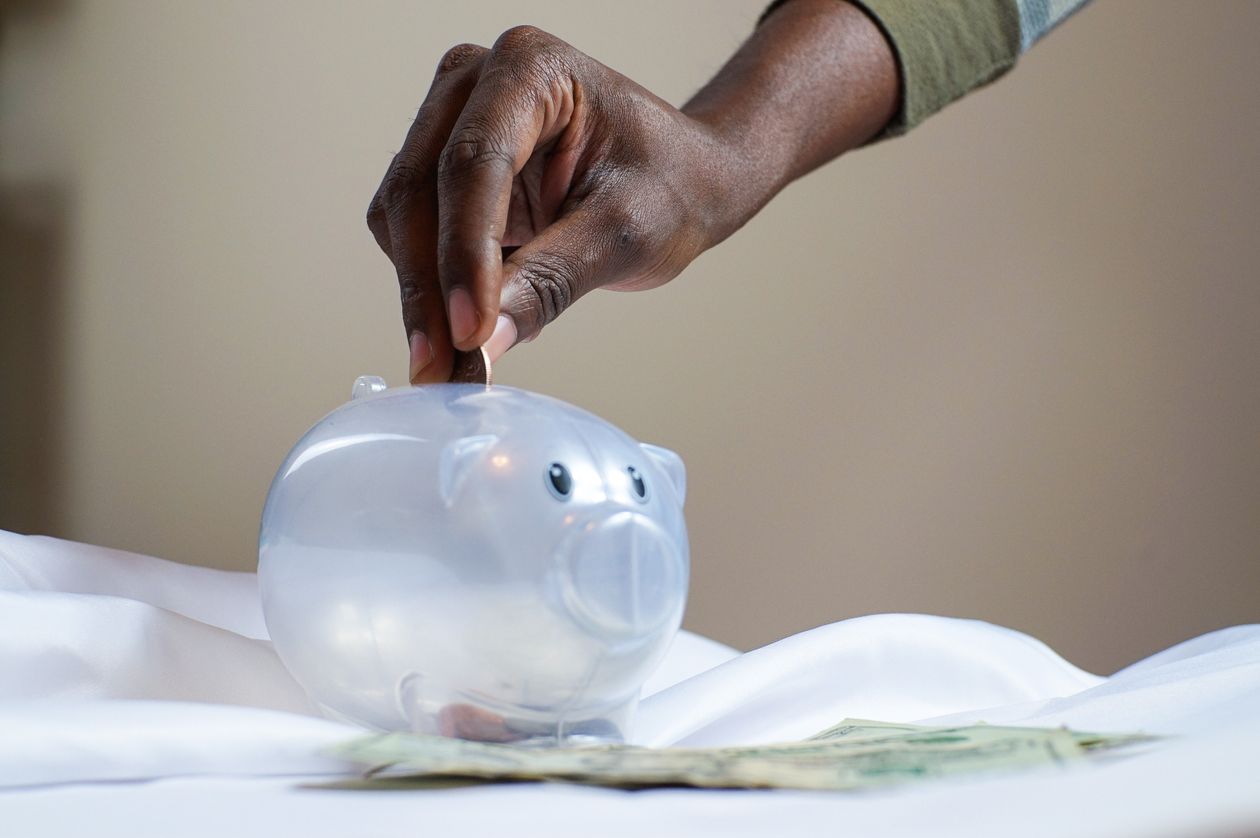
What an emergency fund is actually for
Two jobs, and they're different.
Job one: cover a hit. The car needs $1,400. The tooth needs a root canal. The flight home for a funeral. These are one-time, they're usually a few hundred to a few thousand, and they're not really emergencies — they're the predictable irregular. They will happen. You just don't know when.
Job two: cover a gap. You lose your income and need to keep existing while you find more. This is the big one, and it's the one the six-month rule is aimed at.
These need different amounts, and if you conflate them you'll either over-save at 22 or under-save at 32.
The two numbers that actually set your target
Forget expenses for a second. Ask two questions.
1. How long would it take to replace your income?
This is the real variable, and it swings enormously.
A barista in a city with a labor shortage could be working again in two weeks. A specialized project manager in a narrow industry might look for seven months. A freelancer with three clients loses one and is down 33% indefinitely.
Be honest here, and be a little pessimistic. How long did it take you last time? How long did it take the person you know who got laid off? Add a month, because job searches always take longer than you think and there's usually a two-to-four-week gap between offer and first paycheck.
2. Who catches you if you fall?
This is the question nobody puts in the articles, and it's the one that changes the number most.
If you could move back into your childhood bedroom for four months, eat your parents' food, and be mildly embarrassed — your true downside is embarrassment. That's real, and it's not homelessness.
If you're the person other people fall back on — if your mother calls you when her car breaks — you have no floor beneath you, and you may in fact be someone's floor. Your fund has to be bigger, and it has to cover more than yourself.
This is uncomfortable to think about clearly. Do it anyway, because it's worth more than any rule of thumb.
At 22: aim for the hit, not the gap
If you're in your early twenties, renting, no dependents, and you have a plausible landing spot — here's the honest read: the six-month rule is probably wrong for you, and chasing it is costing you.
Your target is more like $1,000–2,500, or roughly one month of expenses.
Why so low? Because at 22:
- Your expenses are the lowest they will ever be, so a month is genuinely a small number.
- Your job is probably replaceable in weeks, not months.
- You likely have a fallback that, however unpleasant, is not catastrophic.
- And critically — the money has forty years to compound. Hoarding $12,000 in a savings account at 22 out of anxiety costs you a fortune later.
What you actually need is enough that a $900 car repair doesn't become a credit card balance that follows you for two years. That's the real risk at 22. Not destitution — the debt spiral that starts with one bad Tuesday.
So: get to $1,000 fast, get to a month, and then put your energy into the things that matter far more at your age. Kill any high-interest debt. Get the full employer 401(k) match, which is free money and is not optional. Then invest.
The exception: if you have no fallback — if there is no bedroom to move back into, if you send money home, if you're supporting anyone — then everything above changes and you should be closer to the 32-year-old advice. Your age isn't the variable. Your exposure is.

At 32: size it to your obligations
By your early thirties the math usually inverts, and the reason is that you've acquired things that can't be paused.
At 22, almost every cost you have is flexible. You can move, get a roommate, cancel things, eat rice. At 32 you may have:
- A mortgage that doesn't care about your circumstances
- A kid whose childcare spot vanishes if you stop paying, and doesn't come back
- A partner whose income may or may not cover the gap
- A specialized job with maybe forty employers nationwide who'd want you
- A location you can't leave because of school, or a partner's work, or family
Every one of those extends your gap and hardens your floor. So six months is now a starting point, not a stretch goal — and for some people it's genuinely light.
Push higher if: you're the sole earner, your industry is contracting, your role is niche, you're in a one-employer town, or anyone depends on you medically.
Push lower if: your partner earns enough to cover the essentials alone, your skills are broadly in demand, or your fixed costs are genuinely small.
Run the number honestly
Don't budget your gap on your current lifestyle. Budget it on survival mode — the version of your life where you've cancelled everything cancellable.
Rent or mortgage. Utilities. Food. Insurance. Minimum debt payments. Childcare, if pausing it means losing the spot. Transport.
Not restaurants, not subscriptions, not the vacation fund. Those stop on day one of an actual emergency.
For a lot of people, survival mode is 60–70% of normal spending. Which means "six months of expenses" is really more like eight months of runway — and knowing that might make the number feel reachable for the first time.
Where to put it
Not in your checking account, where it's indistinguishable from spending money and gets spent.
Not invested. This is the mistake people make in good markets — the whole purpose of this money is to be there on the day it's needed, and emergencies correlate with downturns. Layoffs happen in the same season the market drops. You'd be forced to sell at the worst possible moment.
Put it in a high-yield savings account at a different bank from your checking. The friction of a two-day transfer is a feature, not a bug — it's just enough to stop a 10pm impulse and not nearly enough to matter in a real emergency.
How to actually get there
Automate it and make it small. An amount that leaves the day you get paid, before you've seen it. Small enough that you don't feel it — $50, $100. Whatever you'd genuinely not notice.
Then leave it alone. The fund isn't supposed to grow impressively; it's supposed to be boring and present.
And when you use it — and you will — that's not a failure. That's the fund doing exactly what it exists for. Refill it and move on.
The actual question
Forget the rule. Ask this:
If my income stopped tomorrow, what would break first, how long until it broke, and who would I call?
Answer that honestly and you'll know your number. It might be $1,500. It might be $40,000. Both are correct answers to the same question asked by two different lives.
Suman Dhamala owns and publishes Ascendance Co, a personal-growth website covering mind, body, soul, relationships, career, performance, money and parenting. Articles provide general educational information.

0 Comments